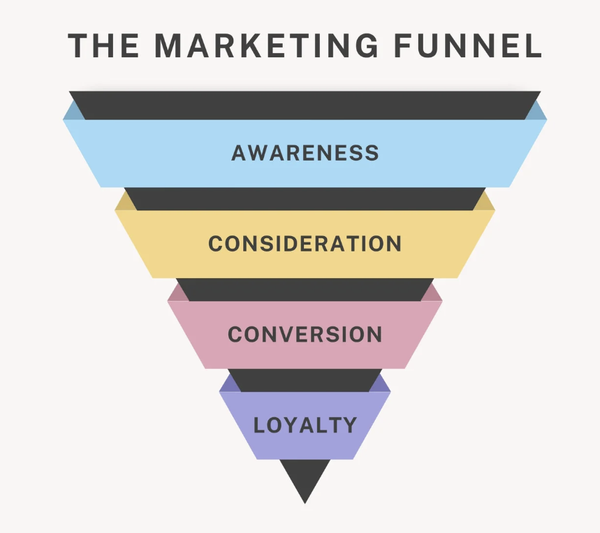
Step #2: Create Targeted Content For Each Stage
Content is key
at every stage of the funnel. Tailor your messaging based on where your audience is in their journey.
Top of the Funnel (Awareness): Blog articles, social posts, YouTube videos
At the top, you want to educate and attract. Create free reports, checklists, blog posts, social media content, videos and downloadable resources in exchange for email addresses.
Focus on providing VALUE and answering broad questions related to your audience’s pain points.
Example: A blog post titled “10 Ways to Improve Your SEO in 2025”
Middle of the Funnel (Consideration): eBooks, email sequences, comparison guides, etc.
Now that people know about your product, it’s time to help them understand WHY your solution is right for them.
Offer case studies, email courses, comparison guides and webinars. Build trust by demonstrating your expertise and nurturing
relationships.
Example: An email course on SEO basics, or a case study on how your solution helped a customer.
Bottom of the Funnel (Conversion): Case studies, offers, customer
reviews
Here, you need to seal the deal.
Use social proof (testimonials, reviews), limited-time offers, and clear calls to action (CTAs).
Provide a clear, low-risk path to conversion.
Example: A free trial or a money-back guarantee.
Offer: A special discount, exclusive offer, or a “book a
demo” button.
Step #3: Set Up Lead Capture Strategies
You need a way to capture prospects as they enter your funnel so you can convert them
into leads.
This usually includes strategies like:
Lead magnets: Offer something valuable in exchange for their email or contact details. e.g., an eBook, webinar registration, or
template.
Landing pages: These are focused, distraction-free pages where users can sign up for your offer.
Calls to Action (CTAs): Place clear CTAs on your website, blog, and
social media encouraging people to take action (e.g., “Download our free SEO checklist”).
This gives you a way to continue the marketing conversation.
So many marketers leave money on the
table because they don't do this.
Step #4: Nurture Your Leads With Email Marketing
Once you the ability to grab a lead's attention
(usually via their email), your job is to nurture them. This means continuing to offer value while gradually moving them toward the sale.
Use an automated email sequence to educate leads about your product or service and remind them of the benefits.
Step #5: Track and Optimize
Once your funnel is up and running, it’s critical to track performance and optimize as you go.
Here are some key metrics to keep your eye on:
Conversion rate: How many leads or visitors take the desired action (e.g., signing up, making a purchase)?
Cost per acquisition (CPA): Term to describe how much you're spending to acquire a lead or customer.
Lead velocity: How quickly are leads moving through your funnel?
Tools like Google Analytics, HubSpot, and conversion tracking (if you're running Facebook and Google Ads) can give you insights into which parts of your funnel are working and which need improvement.
Be on the lookout for bottlenecks and tweak content or CTAs as needed.
Step #6: Closing the Deal
The bottom of your funnel is where the magic happens—converting your leads into paying customers.
Use the following strategies to pave the way to the sale:
Clear CTAs: Have a clear next step for them to take. For example, "Buy Now," "Schedule a Demo," or "Start Free Trial."
Testimonials and Case Studies: Social proof helps reduce friction and builds trust.
Urgency and Scarcity: Limited-time offers, countdown timers, and exclusive deals can help nudge leads to convert.
Step #7: Continuously Work On Improving Your Funnel
Your marketing funnel is an evolving strategy. Never stop looking for ways to
improve its effectiveness.
Here are some ways to keep it at the top of its game:
A/B Testing: Test different CTAs, landing pages, or email sequences to see what works
best.
Follow-up: After the sale, nurture customers to turn them into repeat buyers or raving fans.
Gather feedback: Reach out to customers and ask what influenced their purchase
decision, and if there were any barriers. Use the feedback to make changes.
Final Thought: Keep It Simple and Focused
The goal of
your marketing funnel isn’t to have the most complicated process; it’s to have a marketing system that leads prospects through a seamless, value-packed journey to conversion.
If your funnel is too complex, it WILL confuse or frustrate potential customers.
Start simple, optimize continuously, and always keep your audience's needs front and center.
Over time, you'll develop a funnel that works for you, delivering consistent leads and higher conversions.
Need help building your funnel? CLICK HERE to book a spot on my calendar and let's talk about it!